Internationally Educated Teachers’ Content and Pedagogical Knowledge and Alignment with the Canadian Elementary Curriculum
Poster Author(s):
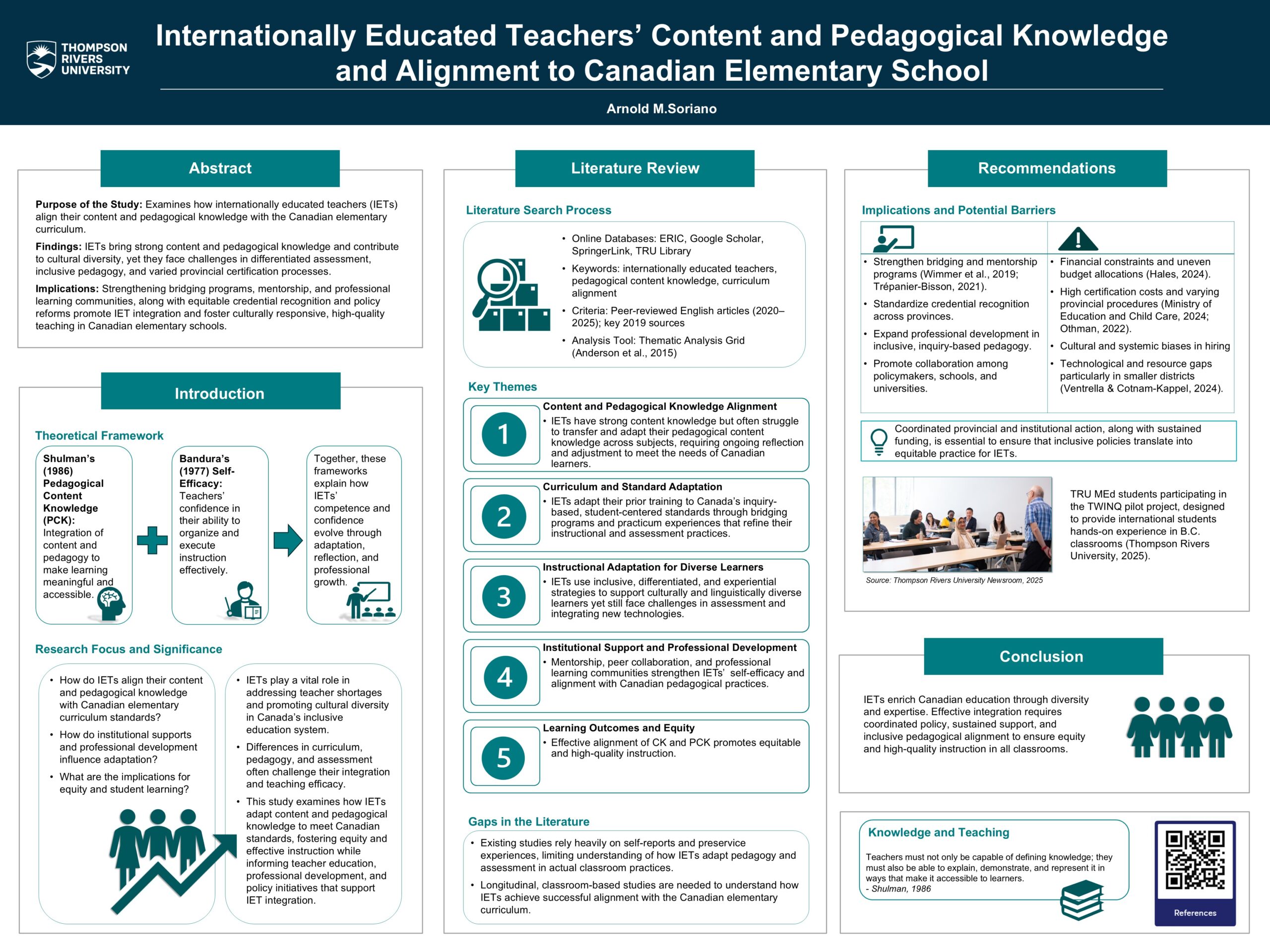
This poster presents a literature-based analysis of how internationally educated teachers (IETs) align their content and pedagogical knowledge with the Canadian elementary curriculum. Grounded in Shulman’s Pedagogical Content Knowledge framework and Bandura’s theory of Self-Efficacy, the review analyzes how IETs adapt their instructional strategies within unfamiliar curricular, cultural, and systemic contexts. Thematic analysis identifies five interrelated areas of inquiry: content and pedagogical knowledge alignment, curriculum and standard adaptation, instructional adaptation for diverse learners, institutional support and professional development, and implications for equity and learning outcomes. Findings indicate that although IETs contribute strong content and pedagogical knowledge and cultural diversity, they face challenges in differentiated assessment, inclusive pedagogy, and varied provincial certification processes. Strengthening bridging programs, mentorship, and professional learning communities, along with equitable credential recognition and policy reforms, is essential for supporting IETs integration and enhancing culturally responsive, high-quality teaching in Canadian elementary schools.